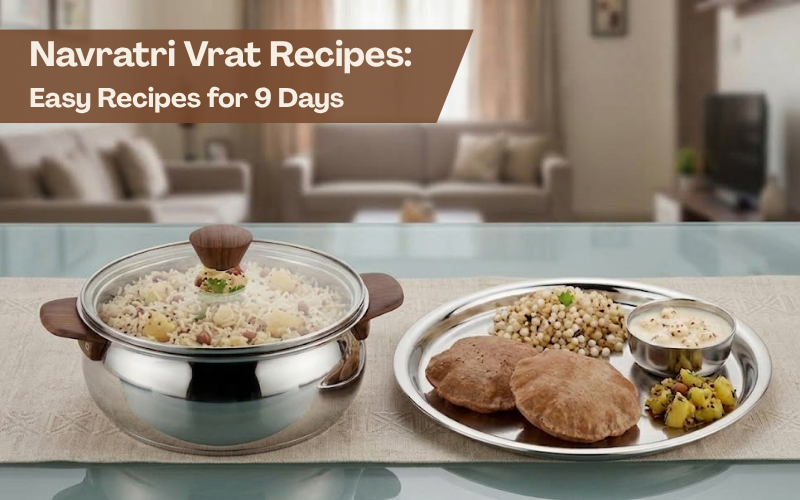
Navratri Vrat Recipes: Easy Recipes for 9 Days
If you are looking for Navratri vrat recipes that are simple to cook and actually filling, you are in the right place. During the 9 days of fasting, you can still enjoy familiar Indian dishes made with commonly accepted ingredients like sabudana, sama rice, kuttu atta, singhara atta, potatoes, makhana, fruits and dairy. This guide gives you one easy recipe for each day of Navratri, along with practical cooking tips.
A quick note before we begin. Fasting customs during Navratri vary from family to family and region to region. Some households follow strict rules, others are more relaxed. Please treat this as a starting point and follow the tradition your family observes.
What Can You Eat During Navratri Vrat?
Most vrat kitchens across India work with a familiar set of ingredients. Here are the ones you will see across almost every Navratri fasting recipe.
- Sabudana (tapioca pearls)
- Sama rice or barnyard millet
- Kuttu atta (buckwheat flour)
- Singhara atta (water chestnut flour)
- Potatoes and sweet potatoes
- Makhana (fox nuts)
- Peanuts
- Seasonal fruits
- Milk, curd and paneer
- Nuts and dry fruits
- Sendha namak (rock salt)
Many families avoid onion, garlic, regular grains like wheat and rice, and regular table salt during Navratri vrat. That said, this varies. Some homes allow certain vegetables and ingredients that others do not, so follow what feels right for your household.
9 Easy Navratri Vrat Recipes for 9 Days
Sabudana Khichdi
A soft, nutty khichdi with peanuts and potato. Light on the stomach and very filling.
Key ingredients: Soaked sabudana, boiled potato, roasted peanuts, green chilli, cumin, ghee, sendha namak, lemon juice.
Method: Soak sabudana for 4 to 5 hours until each pearl is soft. Heat ghee, splutter cumin, add green chilli and cubed boiled potato. Add crushed peanuts, then the drained sabudana. Sprinkle sendha namak, cook on low for 4 to 5 minutes until translucent. Finish with lemon juice and coriander.
Vrat Aloo Jeera
A dry potato sabzi with cumin and green chilli. Pairs with kuttu roti or curd.
Key ingredients: Boiled potato cubes, cumin seeds, ghee, green chilli, sendha namak, black pepper, coriander.
Method: Heat ghee in a kadhai, add cumin and let it splutter. Add slit green chillies, then the potato cubes. Sprinkle sendha namak and black pepper. Toss on medium flame for 6 to 7 minutes until edges turn golden. Garnish with coriander.
Sama Rice Pulao
A one-pot pulao with sama rice, vegetables and mild spices. Feels like a proper meal.
Key ingredients: Sama rice, ghee, cumin, cubed potato, carrot, peanuts, green chilli, sendha namak.
Method: Rinse sama rice and drain. Heat ghee, add cumin, peanuts and green chilli. Add vegetables and saute for 2 minutes. Add sama rice, water in a 1:2 ratio, and sendha namak. Cover and cook on low for 12 to 15 minutes until fluffy.
Cookware that makes these recipes easier

Doniv Induction Bottom Multi Kadhai with 5 Plates
₹3,680

Claro Heavy Gauge SS Plain Kadhai (1700 ml)
₹2,160

Doniv Titanium Triply Pressure Cooker 2 Ltr
₹3,469

Doniv Titanium Triply Fry Pan 26 cms
₹2,250
Kuttu Atta Puri
Soft, crisp puris made from buckwheat flour. Great with vrat aloo sabzi or curd.
Key ingredients: Kuttu atta, mashed boiled potato, sendha namak, ajwain (if your family allows), ghee for frying.
Method: Mix kuttu atta with mashed potato and sendha namak. Add a splash of water and knead into a soft dough. Rest for 10 minutes. Roll small puris between two greased sheets of parchment. Fry in hot ghee until puffed and golden.
Makhana Kheer
A creamy, mildly sweet kheer made with roasted makhana and full-cream milk.
Key ingredients: Makhana, full-cream milk, sugar, cardamom powder, chopped almonds and cashews, ghee.
Method: Dry roast makhana in a heavy pan until crisp. Crush half of them roughly, leave the rest whole. Simmer milk in a heavy-bottomed pan, add makhana and let it thicken for 15 to 20 minutes. Stir in sugar, cardamom and chopped nuts.
Sabudana Vada
Crisp on the outside, soft inside. A classic vrat snack that fills you up.
Key ingredients: Soaked sabudana, boiled potato, roasted peanuts, green chilli, coriander, sendha namak, ghee or oil for frying.
Method: Mix drained sabudana with mashed potato, crushed peanuts, chopped green chilli, coriander and sendha namak. Shape into small patties. Deep or shallow fry until golden and crisp. Serve with curd.
Vrat Wale Aloo (Potato Curry)
A light, tangy potato curry with tomato and sendha namak. Pairs with kuttu puri or sama rice.
Key ingredients: Boiled potato, tomato puree, cumin, green chilli, ginger, sendha namak, red chilli powder, ghee, coriander.
Method: Heat ghee, splutter cumin, add ginger and green chilli. Add tomato puree and cook until oil separates. Add red chilli, sendha namak and the boiled potato cubes. Pour in water for gravy, simmer for 6 to 7 minutes. Finish with coriander.
Singhara or Kuttu Cheela
A quick savoury pancake made with singhara or kuttu atta. Ready in under 15 minutes.
Key ingredients: Singhara atta or kuttu atta, grated bottle gourd or boiled potato, green chilli, coriander, sendha namak, ghee.
Method: Whisk atta with water into a smooth batter. Mix in grated vegetable, chopped green chilli, coriander and sendha namak. Spread a ladleful on a hot pan greased with ghee. Cook on medium until edges lift, flip and cook the other side.
Sama Rice Khichdi
A soft, comforting khichdi that closes the fast on a light note.
Key ingredients: Sama rice, ghee, cumin, green chilli, cubed potato, peanuts, sendha namak.
Method: Rinse sama rice. Heat ghee, add cumin, peanuts, green chilli and potato. Add sama rice and water in a 1:3 ratio, along with sendha namak. Cover and cook on low until soft. Finish with a spoon of ghee.
More cookware to keep your vrat cooking simple

Doniv Titanium Triply Tasla 20 cms (1.65 L)
₹1,313

Doniv Sandwich Bottom Sauce Pan with Lid 18 cm
₹1,216

Doniv Titanium Triply Tope with Cover 16 cms
₹1,763

Aroma Insulated Casserole with Glass Lid (750 ml)
₹1,144
Tips for Making Navratri Cooking Easier
Cooking every day for 9 days can feel like a lot, especially alongside prayers and pooja preparations. A little prep goes a long way.
- Prep potatoes ahead: Boil potatoes for 2 to 3 days at a time and store peeled in the fridge. They are used in almost every vrat recipe.
- Roast makhana in batches: Dry roast a big batch, store in an airtight jar. Ready for kheer, snacks or a quick bowl with ghee.
- Keep vrat flours labelled and separate: Store kuttu and singhara atta in clearly marked jars, away from wheat flour.
- Soak sabudana correctly: Use just enough water to cover it. Soak for 4 to 5 hours, then drain fully.
- Cook fresh, cook smaller: Vrat food tastes best fresh. A small kadhai or tope is often more useful than a large one.
- Sendha namak in its own jar: Keep it clearly separate from regular salt to avoid mix-ups during a fast.
- Plan your 9 days in advance: A simple day-wise menu saves the daily what-to-cook stress.
Cook Navratri with cookware that lasts
Stainless steel is a natural fit for vrat cooking. It is safe, easy to clean and works beautifully with ghee, milk and starchy vrat ingredients.
Explore Vinod Steel CookwareFrequently Asked Questions
What can I eat during Navratri vrat?
Most Navratri vrat kitchens use sabudana, sama rice, kuttu atta, singhara atta, potatoes, sweet potatoes, makhana, peanuts, fruits, milk, curd, paneer, dry fruits and sendha namak. Specific rules vary by family and region, so follow the tradition your household observes.
What are some easy Navratri vrat recipes?
Simple options include sabudana khichdi, vrat aloo jeera, sama rice pulao, kuttu puri, makhana kheer, sabudana vada, vrat wale aloo, singhara cheela and sama rice khichdi. Most take 20 to 30 minutes and use familiar vrat ingredients.
Can we eat rice during Navratri fasting?
Regular rice is commonly avoided during Navratri vrat. However, sama rice (also called barnyard millet or moraiyo) is widely accepted and used in khichdi and pulao. Please follow your family's practice.
Is sabudana allowed during Navratri vrat?
Yes, sabudana is one of the most commonly used ingredients during Navratri fasting. It is used in khichdi, vada, kheer and tikki. It is filling and provides quick energy.
Which flour can be eaten during Navratri fast?
Kuttu atta (buckwheat flour) and singhara atta (water chestnut flour) are the two most commonly accepted flours during Navratri vrat. They are used for puris, cheelas and rotis. Rajgira atta (amaranth) is also used in some households.
What can I eat for dinner during Navratri fasting?
Good vrat dinner options include sama rice khichdi, sabudana khichdi, kuttu puri with vrat aloo, or a simple bowl of makhana kheer with fruits. Keep dinner light and easy to digest.
What foods should be avoided during Navratri vrat?
Most fasting households avoid wheat, regular rice, lentils, onion, garlic, regular table salt, non-vegetarian food, alcohol and processed foods. Rules do vary between families and regions, so follow the practice your household follows.