
|
✦ Navratri Special ✦
5 Quick Navratri Vrat Recipes You Can Make Easily in a Stainless Steel Kadai |
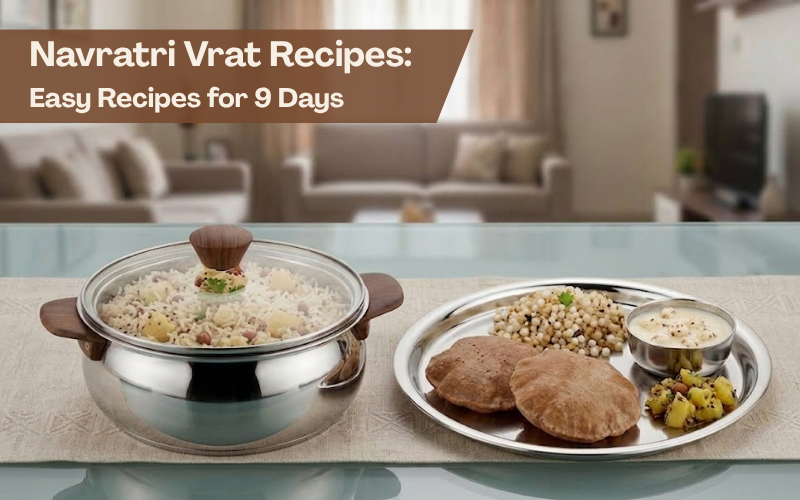
Every year, my grandmother's kitchen goes a little quiet during Navratri. No onion, no garlic, no rush, just a handful of ingredients she trusts completely: sabudana, kuttu atta, makhana, sendha namak. And yet, nine days later, we're always a little sad to see the fasting menu end, because vrat ka khana has a lightness and comfort that everyday cooking rarely matches.
What I've learnt watching her cook is that these dishes don't ask for much, just a heavy-bottomed kadai that heats evenly, so the sabudana doesn't turn into a sticky ball and the puris don't burn before they puff up. Here are five recipes I make on repeat during the fasting days, each one quick enough for a weekday.
|
Cooking vrat food regularly through Navratri? You'll love the range of Vinod Steel cookware, sturdy, even-heating, and built for everyday Indian cooking, fasting days included. Shop Vinod Steel Cookware |
1. Sabudana Khichdi
This is the one dish almost every Navratri thali has in common, and for good reason, soaked sago tossed with roasted peanuts, potato, and curry leaves is filling without feeling heavy. The trick is entirely in the soaking and the pan: too much heat and the sabudana clumps into a paste instead of staying separate and pearly.
Ingredients (serves 2)
- ✓1 cup sabudana (sago), soaked 4 to 6 hours or overnight
- ✓¼ cup roasted peanuts, coarsely crushed
- ✓1 medium potato, boiled and diced
- ✓1 tsp cumin seeds
- ✓2 green chillies, finely chopped
- ✓8 to 10 curry leaves
- ✓2 tbsp ghee
- ✓Sendha namak (rock salt) and 1 tsp sugar, to taste
- ✓1 tbsp lemon juice, fresh coriander to garnish
Method
- Drain the soaked sabudana well in a sieve, this is the step people rush, and it's the reason for lumpy khichdi. It should look separate and slightly translucent, not wet.
- Heat ghee in a heavy-bottom kadai steel over medium flame. Add cumin seeds, curry leaves, and green chillies, and let them sizzle for 10 to 15 seconds.
- Add the diced potato and toss for a minute so it picks up the tempering.
- Lower the flame, add the drained sabudana, crushed peanuts, salt, and sugar. Mix gently with a light hand, you're folding, not stirring hard.
- Cover and cook on low flame for 4 to 5 minutes, stirring once halfway, until the sabudana turns glossy and translucent.
- Turn off the flame, finish with lemon juice and coriander, and serve immediately while it's warm.
Products You Need for This Recipe |


Pro tips for this recipe
- •Rub a few drops of oil into the drained sabudana before cooking, it keeps the pearls from sticking to each other even if they're a touch too wet.
- •Roast your own peanuts instead of buying roasted ones, home-roasted peanuts crush into bigger, crunchier bits that hold up against the soft sabudana.
- •If your sabudana turns mushy, it's usually the soak time, different brands absorb water at different rates, so start checking after 4 hours instead of assuming overnight is always right.
- •Add the peanuts and salt only in the last two minutes of cooking, adding them too early makes the khichdi taste flat by the time it's done.
2. Kuttu Atta Puri
Buckwheat flour puris are the closest thing to comfort food during a fast, crisp on the outside, soft inside, and perfect alongside the aloo jeera below. Kuttu dough doesn't hold together the way wheat dough does, so mashed potato is doing double duty here: binding and flavour.
Ingredients (makes 10 to 12 small puris)
- ✓1 cup kuttu atta (buckwheat flour)
- ✓1 medium potato, boiled and mashed
- ✓½ tsp ajwain (carom seeds)
- ✓Sendha namak, to taste
- ✓Water, as needed to bind
- ✓Oil or ghee, for deep frying
Method
- Mix kuttu atta, mashed potato, ajwain, and salt in a bowl. Add water a little at a time and knead into a firm, slightly sticky dough, it won't behave like wheat dough, so don't over-knead.
- Divide into small balls and roll out thin between two sheets of parchment or greased plastic (kuttu dough tears easily on a dry board).
- Heat oil in a kadai on medium-high flame. It's ready when a small piece of dough dropped in puffs up immediately.
- Slide in the puris one at a time and gently press with a slotted spoon so they puff. Fry until golden on both sides, about 30 to 40 seconds per side.
- Drain on a plate lined with paper and serve hot with aloo jeera (recipe below).
Products You Need for This Recipe |


Pro tips for this recipe
- •Rest the kneaded dough for 10 minutes before rolling, kuttu dough firms up slightly as it rests, making it much easier to roll without tearing.
- •Roll the puris slightly thicker than usual wheat puris, thin kuttu puris tend to crack instead of puff.
- •Test oil temperature with a pea-sized piece of dough first, if it sinks and doesn't rise quickly, your puris will soak up oil instead of puffing.
- •Fry in small batches of 2 to 3, kuttu puris drop the oil temperature faster than wheat puris, so overcrowding leads to flat, oily puris.
3. Vrat Aloo Jeera
Dry, cumin-tossed potatoes are the dish that makes everything else on the vrat thali feel complete, it takes fifteen minutes and pairs with the kuttu puris above, or on its own with a bowl of curd. The only thing that separates a good aloo jeera from a great one is giving the potatoes room to pick up a little colour instead of steaming in their own moisture.
Ingredients (serves 2 to 3)
- ✓4 medium potatoes, boiled and cubed
- ✓2 tbsp ghee or oil
- ✓1 tsp cumin seeds
- ✓1 green chilli, slit; 1 tsp grated ginger
- ✓Sendha namak and crushed black pepper, to taste
- ✓Fresh coriander and a squeeze of lemon, to finish
Method
- Heat ghee in a wide, shallow tasla or kadai over medium flame. Add cumin seeds and let them crackle.
- Add ginger and green chilli, sauté for 20 seconds.
- Slide in the cubed potatoes and toss to coat evenly in the tempering. Spread them out rather than piling them up, a shallow, wide base helps here, since crowded potatoes steam instead of browning.
- Sprinkle salt and pepper, then let the potatoes sit undisturbed for a minute or two at a time, tossing occasionally, until they pick up a light golden crust, about 6 to 8 minutes total.
- Finish with lemon juice and fresh coriander. Serve hot.
Products You Need for This Recipe |
Pro tips for this recipe
- •Boil the potatoes a day ahead and let them cool completely before cubing, warm potatoes break apart and turn mushy when tossed.
- •Resist the urge to stir constantly, let the potatoes sit undisturbed for 60 to 90 seconds at a time so they actually develop colour instead of steaming.
- •A wide, shallow pan works better than a deep one here since it lets steam escape instead of trapping moisture.
- •Add lemon juice off the flame, not while cooking, direct heat mutes the sourness, so you'll end up adding more than you actually need.
4. Makhana Kheer
If sabudana khichdi is the meal, makhana kheer is the reward at the end of a fasting day. Roasted foxnuts simmered in reducing milk turn softly chewy in some spots and melt-in-the-mouth in others, and it comes together with almost no active effort once the milk is on.
Ingredients (serves 2)
- ✓500 ml full-fat milk
- ✓1 cup makhana (foxnuts)
- ✓1 tsp ghee
- ✓3 to 4 tbsp sugar or jaggery, to taste
- ✓¼ tsp cardamom powder
- ✓A few strands of saffron (optional); chopped almonds and pistachios, to garnish
Method
- Heat ghee in a small tope or saucepan and roast the makhana on low flame for 4 to 5 minutes, until crisp and lightly golden. Set aside a handful whole; roughly crush the rest.
- In the same pan, bring the milk to a gentle boil, then lower the flame so it simmers steadily.
- Add the crushed and whole makhana to the milk and let it simmer for 12 to 15 minutes, stirring every few minutes so it doesn't catch at the bottom.
- Once the milk has thickened and coats the back of a spoon, stir in sugar, cardamom, and saffron. Simmer 2 more minutes.
- Garnish with almonds and pistachios. Serve warm, or chilled the next day, it thickens further as it sits.
Products You Need for This Recipe |


Pro tips for this recipe
- •Roast the makhana in ghee until they sound hollow when tapped with a spoon, that's the real test of doneness, not just colour.
- •Crush only half the makhana before adding to the milk; the whole ones stay pleasantly chewy while the crushed ones thicken the kheer naturally.
- •Add sugar only after the milk has reduced and thickened, sugar added too early can slow down the reduction.
- •Scrape the sides of the pan occasionally, not just the bottom, that's usually where milk solids collect and burn first.
5. Samvat (Sama) Rice Pulao
Samvat rice, technically barnyard millet, not rice at all, is the one Navratri grain that cooks up light and fluffy in under 20 minutes, which makes it my go-to when I want something more filling than khichdi without much extra effort. It takes to a simple potato-peanut tempering the same way regular pulao takes to whole spices.
Ingredients (serves 2 to 3)
- ✓1 cup samvat/sama rice, rinsed and soaked 20 minutes
- ✓2 tbsp ghee
- ✓1 tsp cumin seeds, 8 to 10 curry leaves
- ✓1 small potato, diced; 2 tbsp peanuts
- ✓1 green chilli, chopped
- ✓Sendha namak, to taste; 2 cups water
- ✓Fresh coriander, to garnish
Method
- Heat ghee in a kadai over medium flame. Add cumin seeds and curry leaves, let them crackle.
- Add peanuts and diced potato, sauté for 2 to 3 minutes until the potato edges start to soften.
- Drain the soaked samvat rice and add it to the kadai. Sauté gently for a minute so the grains get coated in ghee.
- Add water and salt, bring to a boil, then cover and simmer on low flame for 12 to 15 minutes, until the water is absorbed and the grains look fluffy.
- Turn off the flame and let it rest, covered, for 5 minutes. Fluff gently with a fork, garnish with coriander, and serve.
Products You Need for This Recipe |

Pro tips for this recipe
- •Don't skip the 20-minute soak, unsoaked samvat rice cooks unevenly and can turn gluey in patches.
- •Use slightly less water than you would for regular rice; samvat absorbs less liquid and turns mushy if overwatered.
- •Let it rest covered for 5 minutes after cooking before opening the lid, this finishes the cooking gently with trapped steam.
- •A pinch of roasted cumin powder stirred in at the end, in addition to the tempering, adds a layer of flavour most people skip.
Why You Need the Right Cookware This Navratri
Vrat cooking is unforgiving of hot spots, sabudana clumps, potatoes scorch, and milk-based sweets catch at the bottom the moment a pan heats unevenly. Good stainless steel cookware spreads that heat evenly across the base instead of concentrating it under the flame, which is exactly why these five recipes come together easily without constant stirring or babysitting the stove. It's also one less thing to worry about during a fasting day, genuine, food-grade Vinod Steel cookware doesn't react with the acidity in lemon juice or curd the way some materials can, so you can cook, season, and taste with complete peace of mind through all nine days.
FAQs
What ingredients are typically avoided during Navratri vrat cooking?
Onion, garlic, regular wheat flour, and iodised table salt are usually skipped. Instead, cooks use sendha namak (rock salt), kuttu (buckwheat) or singhare (water chestnut) atta, sabudana, samvat rice, and fresh vegetables like potato, pumpkin, and cucumber. Rules vary a little by family and region, so it's worth checking your own household's practice.
Why does my sabudana khichdi turn sticky instead of fluffy?
Almost always it's under-soaking or over-soaking the sago, or draining it poorly before cooking. Soak for 4 to 6 hours (or overnight) in just enough water to cover the pearls, then drain thoroughly in a sieve until they look separate, not wet, before they go into the kadai.
Can I fry kuttu atta puris in a stainless steel kadai without them sticking to the base?
Yes, for deep frying, sticking is rarely an issue since the puris are floating in oil rather than sitting on the base. Just make sure the oil is hot enough before the first puri goes in (a small piece of dough should puff up immediately) and use a kadai with a heavy, evenly-heated base so the oil temperature doesn't dip once you start frying in batches.
Is stainless steel cookware considered suitable for vrat/fasting food?
Yes, genuine food-grade stainless steel is a traditional and widely used choice for vrat cooking across Indian households. It doesn't react with acidic ingredients like lemon, curd, or tomato, which matters for dishes finished with a squeeze of lemon, and it's easy to clean thoroughly between the fasting days' meals.
What size kadai is best for cooking Navratri vrat food for a family of 4?
A 20 to 24 cm kadai with roughly 1.65 to 2.6 litre capacity comfortably handles khichdi, pulao, or aloo jeera for two to four people, with enough room to toss the ingredients without spilling over the sides. For smaller portions like kheer or a single serving of sabzi, a smaller tope or saucepan works better and heats up faster.
Can these Navratri recipes be prepped ahead of time?
Sabudana can be soaked the night before, potatoes can be boiled a day in advance, and kuttu dough can be kneaded a few hours ahead if kept covered. Makhana kheer actually improves after a few hours in the fridge as it thickens further. Frying puris and finishing the khichdi, though, are best done fresh right before eating.
How do I clean a stainless steel kadai after frying puris or making kheer?
Let the kadai cool slightly, then soak it in warm water with a little dish soap for 5 to 10 minutes to loosen any milk solids or oil residue before washing. For stubborn milk stains from kheer, a paste of baking soda and water left on for a few minutes usually lifts it without scrubbing hard.
Explore the full Vinod Steel range — cookware, tableware, tiffins and dinner sets. ISI certified, food grade, lifetime guarantee against rust.